Big Three, Big Vehicles Taken to the Watershed in May
By Michelle Krebs June 3, 2008
By Dale Buss and Michelle Krebs
Only a few months into the Slump of 2008, at least two things are painfully clear in what has become a topsy-turvy U.S. auto market.
The bigger the carmaker, the harder the ride these days -- even Toyota. General Motors' sales declined the most in May compared with a year ago, by 30 percent; Chrysler's fell by 25 percent; Ford, by 16 percent; and Toyota, by 8 percent. The Detroit Three's domestic market share in May, 45.5 percent, was a record low for any month.
And the larger the vehicle, the faster its sales are teetering into the abyss. Sales of pickup trucks and traditional SUVs plunged across the board in May. So, GM said it is permanently shuttering some truck and SUV plants, adding some car-making capacity, and considering ditching Hummer.
But newly popular small cars are popping up like life preservers on the industry's troubled ocean. Honda's Civic was the top seller for the month, at more than 53,000 units.
Small Sells
Nearly everything in the industry's so-called "B-C" segment of subcompact and compact cars sold at a torrid pace in May, as Americans finally reacted en masse to gasoline prices at once-unthinkable levels now exceeding $4 a gallon. Buyers flocked to both domestic and Asian makes of small cars, helping Honda, Nissan and other importers post sales increases for the month.
In February, with gasoline prices nationwide still averaging below $3 a gallon, small and mid-size cars still represented only 34 percent of the U.S. market. Last month, stunningly, that proportion had risen to 47 percent.
The most telling slice from the May report: For the first time, Civic and the Honda Accord, as well as the Toyota Corolla and Camry, each outsold F-Series pickups, which long have been the industry's best-selling vehicle. No car had outsold the F-Series on a monthly basis since October 1991.
"It's a significant development, but not surprising, given fuel prices," said Jim Farley, Ford's executive vice president for marketing and communications. And Farley conceded it was a "possibility" that Camry could knock off F-Series as the best-selling vehicle for all of 2008, because of the industry's huge segment shifts so far this year.
Two other developments in May seemed to be solidifying into trends as well. Growth in sales of crossover vehicles, the hottest segment overall last year, collectively plateaued, though newer models outsold older ones. And the U.S. luxury-vehicle market is slipping by about the same proportion as overall sales, indicating that upscale buyers are feeling their own economic pressures.
A New Era
Overall, the U.S. light-vehicle industry posted May sales of about 1.4 million units, a decline of about 11 percent compared with May 2007. And it receded to an annual sales pace of about 14.7 million units, not yet halfway through a year that executives until lately expected to finish at a 16-million sales rate.
On Tuesday, as they glumly dissected their sales reports for May, auto executives agreed that stratospheric gasoline prices have altered consumer behavior so drastically in favor of fuel-efficient vehicles that the industry is having to rework its basic assumptions not only about the present but also about the future.
Even though American Honda's sales actually rose by 11 percent in May, the industry's best mark, Executive Vice President Dick Colliver acknowledged that the flipping of segments "appears to be one of the most profound shifts in automotive buying in more than a decade."
Ford's Farley inferred even more significance from the new patterns, dubbing them "the most dramatic shift in customer segmentation in two or three decades." He called May the "watershed month" in the industry's rapid transition out of the era of the full-size vehicle. "We as an industry are catching up with the breathtaking choices consumers are now making."
And Jim Press, Chrysler's vice chairman and president, said that nothing less than "a new era" was "emerging in the restructuring of the American economy."
Can't Quit Now
Still, the automakers must continue to deal with the changes as they are dealt, a reality that prompted GM's major actions announced by CEO Rick Wagoner on Tuesday before its annual meeting.
Mark LaNeve, GM North America vice president of sales, said that "all kinds of things" happen in such a roiled market. "People are not just moving to fuel-efficient products - which we're seeing for sure - but they're also moving to smaller, less expensive products, trying to get the cheaper payment. If the fuel economy is better, so much the better."
And despite the wallops that GM has sustained recently, including a major-supplier strike, the company is sticking with its current forecast that shows a modest uptick in auto sales in the second half of 2008 if oil prices stabilize at current levels or lower. "It'll be 2009 before a more substantial recovery," LaNeve said.
LaNeve insisted that American consumers are battered but not down for the count. After all, the nation hasn't entered a true recession, by the most recent statistics available. And despite the fact that consumer confidence is at a long-time low, GM officials noted, the "misery index" - the number combining the consumer price index and unemployment rate - is only at about 10; in 1980, it was around 20.
"People are worried," LaNeve conceded, "but they haven't totally closed their wallets yet."
GENERAL MOTORS
A "challenging month" is how Mike DiGiovanni, GM's executive director of global market and industry analysis, described May in a conference call Tuesday afternoon with media and analysts.
That's an understatement.
GM, celebrating its 100th anniversary this year, had one of the worst months in its history. Its market share slipped below 20 percent for the first time ever. Its sales declined a whopping 30 percent - more than analysts expected; Edmunds.com, parent of AutoObserver, projected GM sales would be down about 20 percent. The sales drop was the steepest monthly decline since 2006, after GM's massive employee pricing program in 2005 that racked up huge sales, LaNeve recalled.
GM blames the sales plummet on the now-settled but lengthy strike by workers against supplier American Axle that forced full or partial closure of up to 30 of GM's North American assembly plants and strikes by its own union workers at plants producing some of GM's most popular vehicles. The strikes left GM low on hot-selling models and short of vehicles to sell to fleets. GM officials said the automaker closed May with the lowest inventory in its recent memory.
Some of GM's hottest models, including the Buick Enclave, Chevrolet Malibu and Cadillac CTS, have well under the ideal 60-day supply. DiGiovanni estimated that the strikes cost GM 15,000 to 18,000 vehicle sales in May, which amounts to about 1.3 to 1.4 percentage points of market share.
DiGiovanni and LaNeve said GM has been watching the shift from large trucks and SUVs to more fuel-efficient cars and crossovers for the past three years, but saw it rapidly accelerate in the last 60 to 90 days. Meanwhile, GM has been trying to convert its product offerings from trucks and SUVs to cars and crossovers.
"We're changing the team on the field during a football game and we're being hindered by supply disruptions," said DiGiovanni.
The Good
On the plus side, GM rode the wave of strong car sales:
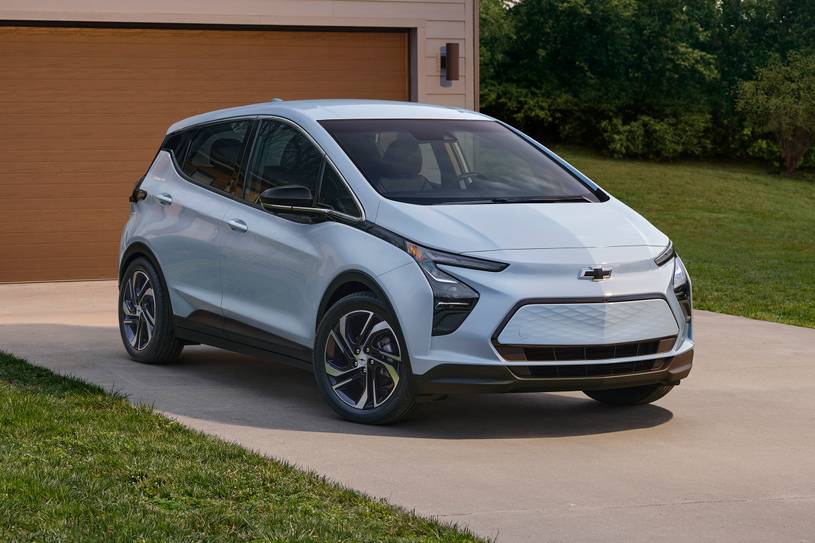
* Chevrolet Aveo sales were up 39 percent in May and 2 percent for the calendar year to date.
* Chevrolet Cobalt sales were up 15 percent for the month and 18 percent for the year.
* Chevrolet Malibu sales soared 34 percent in May and up 26 percent for the year.
* Pontiac G6 sales were up 9 percent in May for a 20-percent increase for the year.
* Sales of the newly freshened Pontiac Vibe skyrocketed 65 percent in May, pushing them 29 percent higher for the year.
* Saturn Aura sales were up 2 percent in May, putting them 20 percent ahead for the year.
The Bad
Nevertheless, per DiGiovanni's football analogy, GM still suffers from having many of the wrong players in the line-up.
Every GM division was down by at least 26 percent in May. Even with Chevy's strong showing in car sales, its overall sales dropped 27 percent in May. In fact, Ford and the Toyota Division outsold Chevy; Honda is within about 14,000 units of matching Chevrolet sales.
The only so-called trucks to post higher sales were the Buick Enclave crossover, Chevrolet Uplander van, which is sold largely to fleets, and the Chevrolet HHR crossover.
Hummer sales were off a whopping 62 percent for the month, leaving no question why GM is reviewing what it should do with Hummer - sell it, revamp it or get rid of it.
TOYOTA
Toyota continued to be caught in a trap of its own making in May, one which has become not that dissimilar from the segment-based structural problems that the Detroit Three have been schizophrenically dealing with for decades.
In May, Toyota's sales declined overall by 4 percent, to 257,000 units. Toyota was hurt mainly by falling sales of its full-size Tundra pickup truck and by SUVs, as the Toyota division's overall non-car sales declined by 12 percent for the month.
On the other hand, sales of its dependable small cars rose smartly, as more U.S. consumers turned to a brand long associated not only with quality but also with fuel efficiency.
The Good
The recently introduced new Corolla went to town in May, selling nearly 53,000 units, up 12
percent compared with sales of its predecessor model a year earlier.
"The all-new Corolla really found its stride this month," said Jim Lentz, president of Toyota Motor Sales U.S.A. He said that's because Corolla "strikes a sweet spot for buyers seeking refinement in addition to fuel efficiency and affordability."
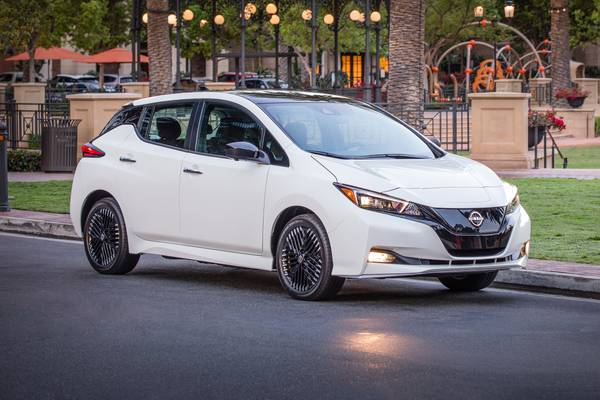
In fact, the Corolla brand - also including the tiny Matrix model - outsold the Camry "family" of models (Camry, Solara and Camry Hybrid) by more than 1,500 units. That was the first time for such an occurrence since February 2007, said Jessica Caldwell, a U.S. sales analyst for Edmunds.com. Together, the Camry and Corolla models made up 45 percent of Toyota division sales.
Another fast-rising small car in the Toyota stable was Yaris, a subcompact whose sales grew 31 percent in May and are up by about half for the year to date.
The Bad
Sales of Prius, like those of nearly every hybrid on the U.S. market these days, were as hot in May as they could possibly be. But because of pesky supply constraints, Prius sales in May actually declined by 37 percent, to just 15,000 units, compared with a year earlier, when sales of more than 24,000 units comprised Prius's best sales month ever.
Tundra has become a real albatross around Toyota's neck, just like the pickup brands long fielded by domestically based OEMs. Sales in May declined 31 percent compared with a year go. In fact, Toyota's Tacoma compact pickup actually outsold Tundra in May, by more than 5,000 units.
However, the darkest aspect of Toyota's sales picture in May was the increasingly troubled performance by its Lexus luxury division. May sales overall for Lexus were down by more than 16 percent for the month; for the year to date, Lexus sales remain off more than 11 percent.
FORD
Ford's results showed why company executives have been expressing growing confidence for the long term even in the face of the completely disrupted current U.S. auto market.
Ford's sales in May totaled 218,000 units, down 16 percent from May 2007. For the year to date, Ford's company-wide sales are down more than 11 percent.
True, Ford's F-Series pickups are getting battered by the relentless elimination of "lifestyle" buyers from consideration and by the fact that many of the remaining F-series intenders are probably opting to wait for a robust new model in the fall. So the F-150 and its kin have, at least temporarily, given up their U.S. sales crown, and Ford has dug out the hoary lure of employee-pricing incentives to see if it can lure more buyers.
But the strong consumer trend toward purchasing crossover utility vehicles - which had so benefited Ford last year after the introduction of its Ford Edge and Lincoln MKX models - at least has remained a wash for the company. Its CUV sales fell by more than 7 percent in May, though they're still up by nearly 8 percent for the year.
"We're not seeing double-digit increases in the CUV category" now as with several months ago, noted George Pipas, head of U.S. industry analysis for Ford. Newer crossover models are selling better than older ones, he said, and many CUVs are being introduced industry-wide. Ford has its own completely new CUV debuting this summer.
And Ford, like the rest of the industry, is being buoyed by massive new consumer demand for its small cars, especially Ford Fusion and Ford Focus. Such vehicles "clearly have become the core segment of the U.S. industry," Farley said, representing almost one-quarter of all vehicles sold in May. And Ford has continued to shift its production plans to favor these vehicles in the future.
The Good
Focus sold nearly 33,000 units, more than 53 percent higher than a year earlier, and its sales are nearly 36 percent higher for the year to date. The only other month during which Focus sold more than 30,000 units, Farley said, was October 2001, when the company was offering zero-percent financing in the wake of the 9/11 terrorist attacks. Inventory of the car is a mere 20 days, meaning that Ford dealers basically are selling the cars as quickly as they can obtain them.
Meanwhile, Fusion sales were up about 30 percent in May compared with 2007, which
Farley said was even more encouraging "because Fusion, unlike Focus, isn't [a] brand new" version. The larger Fusion sold 18,000 units, its best month ever.
Ford is selling Ford Escape and Mercury Mariner Hybrids at an annual pace of 24,000 units, about the same as a year ago, because demand is growing while Ford's supplies remain constrained for now. "They're pretty hard to find," Pipas said.
The Bad
All divisions of the company have posted lower sales for the year to date.
Truck sales declined 26 percent in May, and are down 15 percent so far this year.
Even compact SUVs suffered a down month for Ford, with overall Escape sales falling nearly 7 percent in May and overall Mariner sales plunging by nearly 25 percent.
CHRYSLER
Chrysler's short-term sales crunch has gotten so bad that its executives were content on Tuesday to note that at least the company's retail-sales pattern is getting closer to the industry's overall rotten retail-sales pattern.
For the record, Chrysler sales in May were nearly 149,000 units, about 25 percent below the year-ago period - not as bad a comparison for the month as strike-impacted GM, but still pretty dismal.
However, a huge chunk of that shortfall came because Chrysler sold 40 percent fewer units to fleets as part of what has become an ongoing strategy for the Detroit Three of weaning themselves from daily-rental fleet sales that tend to hurt the residual values of their vehicles. Chrysler got hit harder than usual in May by that strategy because it had "extremely high fleet business" a year earlier, explained Steven Landry, Chrysler's executive vice president for North American sales.
Neither did Chrysler seem to gain much from its highly touted incentive program, called Let's Refuel America, that offers to price-protect consumers against gasoline prices higher than $2.99 a gallon for three years. The program created lots of online buzz and discussion at Chrysler dealerships but appears to have done little to drive actual sales.
Only fewer than 10 percent of Chrysler buyers have opted for Let's Refuel America over the other incentives that are available on the same Chrysler models. "The tradeoff is three-year comfort at $2.99 a gallon [for gas] or using a rebate to bring the monthly payment down," Landry said. "And in a lot of cases, the monthly payment takes precedence."
The Good
Chrysler Aspen sales rose 18 percent and are up 12 percent for the year to date. It is a
traditional SUV, but Landry noted that Aspen "has got a ton of value packed into it. and some people are still buying SUVs and trucks and minivans." Aspen also has an optional Multi Displacement Engine that boosts fuel economy by idling some cylinders when possible.
Dodge Journey, Chrysler's first true crossover, has emerged strong out of the gate since its introduction a few months ago, and notched sales of about 5,000 units in May.
Jeep Patriot, one of the company's most fuel-efficient SUVs, saw sales nearly double in May.
Sales of the Dodge Caliber small car set a new monthly record in May.
The Bad
Just about every other model in each of Chrysler's divisions did worse than a year ago.
And most vehicles posted a dramatic decline. Ram sales were down 37 percent for the month and are down 27 percent so far this year. Sebring posted a 31 percent decline in May.
HONDA
Honda, led by its venerable Civic, is the poster child for a company with the right product
portfolio in a lousy economy socked by skyrocketing gas prices.
Combined, Honda and Acura set an all-time record for any month, racking up sales of 167,997, an 11.3- percent increase on a daily sales rate. Civic led the chart with sales of more than 50,000 units, more of any one model that Honda has ever sold.
Colliver said, in the company's statement, that "record sales of the Honda Civic clearly demonstrate an accelerated trend toward fuel efficiency."
The Good
Honda shattered the following records in May:
· Best-ever month for total American Honda vehicle sales. American Honda total vehicle sales of 167,997 broke the previous record of 158,342 set in August 2007. Combined Honda and Acura sales were up 11.3 percent in May from a year ago, pushing the automaker 3.1 percent for the calendar year to date. Honda, including Acura, outsold Chevrolet.
· Best-ever American Honda total car sales. Honda and Acura sold 114,796 cars, surpassing the previous record of 95,686 set in August 2002. American Honda's May car sales were up 27 percent from the year-ago May and 11.3 percent higher so far this year.
· Best-ever Honda Division total vehicle sales. Honda Division sold 153,104 vehicles, surpassing the August 2007 record of 141,906. Honda sales were up 13.9 percent in May and are 5.4-percent higher for the year. Honda division came within 14,098 vehicle sales of matching Chevrolet.
· Best-ever Honda Division car sales of 105,548, breaking the previous record of 84,390 set in August 2003.
· Best-ever Honda Civic sales; best-ever monthly sales for any Honda model in history. Honda sold 53,299 Civics in May, compared with 39,993 a year ago, which was the previous record. Similarly, the Honda Civic Hybrid set a new monthly sales record of 4,676 sold, breaking the previous record of 4,520 set in May a year ago. Add the standard issue Civic with the Civic Hybrid, and the total comes to 57,975 Civics. That surpasses the previous record of 49,098 Accords Honda sold in August 2003 as its best seller. And the Civic handily outsold the Corolla, Camry and Accord, making it the best-selling vehicle in America by a wide margin in May.
· Best-ever Honda Fit sales. Honda sold 8,205 Fit models, breaking the previous record of 6,835 set in April 2007. May sales were 47.4 percent higher than May 2007, causing year-to-date sales to soar by 61.5 percent.
· Best-ever Acura TSX sales. Acura sold 4,564 units of the redesigned TSX, breaking the April 2006 record of 3,911 sold. TSX sales soared 53.7 percent ahead of last May's.
· Best May for Honda Accord. Though it got off to a slow start, the redesigned Accord has caught on like wildfire.
· Best May for Honda CR-V. The best-selling SUV in America set a new high of 19,959 vehicles sold, surpassing its own previous record of 19,513 set in 2007.
The Bad
Trucks and the Acura division continue to be a drag on American Honda. One can only imagined American Honda's sales performance if it could only turn around Acura.
Acura sales dropped 9.9 percent in May, bringing year-to-date sales down by 13.8 percent. Still, Acura is within 1,397 units of Toyota's normally more successful Lexus division this month.
In total, American Honda's truck sales were off 12.1 percent in May and 7.4 percent for the year. For Honda alone, truck sales were off 11.4 percent in May and 6.7 percent for the year. Acura's truck sales fell 18.1 percent in May, pushing them 12.5 percent lower for the year.
NISSAN
Nissan had a record May, selling 100,874 vehicles, up 4.4 percent from a year ago. The Nissan Division saw a sales rise of 5.7 percent, offsetting the 6-percent sales decline of the Infiniti division.
The Good
Nissan Division benefits from a solid lineup of small fuel-efficient cars. Car sales lifted Nissan
with sales up 14.3 percent in May and 6.5 percent for the year to date. And it was the little guys who carried the brand. The trio of Versa, Sentra and Altima combined for 58 percent of Nissan/Infiniti sales.
Nissan Versa sales rose 10.6 percent in May for a 19.6 percent increase for the year so far. Sentra sales edged up 5.5 percent in May for a 19.6-percent rise for the year. And Nissan Altima sales, which set a new monthly sales record, oared 38.3 percent in may for a 14.9 percent rise for the year.
Nissan's Rogue had its best month since it was launched last September at 7,467 units.
The Bad
Except for the Nissan triplets and the Infiniti G coupe (sales of the G37 Coupe rose 90.3 percent over May 2007 to 2,275 units), every other model in the Nissan and Infiniti lines experienced a sales drop in May.
But it was trucks that really dragged down Nissan. In total, Nissan and Infiniti truck sales slumped 13.5 percent in May, bringing the year's decline to 11.2 percent. Nissan truck sales were down 14 percent in May and 12.4 percent for the year. Infiniti trucks were down 8.6 percent in May though they are up 4.7 percent for the year to date due largely to the incremental sales of the all-new EX, sales of which hit 1,201 units in May.
Despite heavy incentives, sales of the Pathfinder, Armada and Titan were off more than 50 percent in May.
Nissan recently announced it was ending production of the Titan and enlisting Chrysler to build a Nissan version of its new Dodge Ram. In addition, Nissan is converting its relatively new Canton, Miss., plant, which makes the Titan and other models but never at full capacity, into a center for making commercial vehicles. That move will displace some Nissan models, including large SUVs. The automaker hasn't indicated what the future of those displaced models will be, but speculation is that some will drop from Nissan's portfolio completely.
HYUNDAI
Hyundai announced sales of about 46,000 units for May, a 6 percent increase over a year ago - and the Korean make's best May ever.
Naturally, Hyundai's most fuel-efficient vehicles - Accent, Elantra and Sonata cars - led Hyundai's sales surge, with increases of 89 percent, 46 percent, and 12 percent, respectively.
"We were able to break the record," noted Dave Zuchowski, vice president of national sales for Hyundai Motor America, "during a period of record-setting oil prices and a sluggish economy."
Meanwhile - perhaps just as predictably because of those same factors -- sales of the company's Santa Fe, Tucson and Veracruz SUVs eased.
BMW
Led by sales of its surging Mini brand, BMW as a company managed to post an overall sales increase of 3 percent in May, to nearly 32,000 vehicles - even though the flagship BMW brand saw its sales fall by nearly 5 percent compared with a year ago.
BMW and other leading luxury brands are beginning to encounter strong headwinds from U.S. economic uncertainties created by the housing-price and credit crunch, in addition to high gas prices. Still, insisted Tom Purves, chairman and CEO of BMW (US) Holding Corp., "we are finding that buyers respond positively to the fact that premium products can also be efficient and smart purchases. This is a message that we continue to communicate about our BMW lineup."
Mini doesn't need much help right now: May sales rose 52 percent, and sales of the small, fuel-efficient, premium vehicles year-to-date are up 36 percent. The results, BMW said, included a good reception for the new Mini Clubman.
KIA
The company's most fuel-efficient vehicles led a 9 percent sales surge in May for Kia compared with May, 2007, to more than 31,000 units.
Sales of the Spectra and Optima small cars rose by 11 percent and 121 percent over 2007, respectively, to record months for each. While rising gasoline prices clearly contributed, Byung Mo Ahn, group president and CEO of Kia Motors America, also attributed Kia's results to "enhancement efforts to Kia's brand image."
Meanwhile, however, sales of the company's Sportage and Sorento SUVs and its Sedona minivan faltered in May.
MAZDA
Posting its best May in 12 years, Mazda's North American sales rose by 4 percent, t nearly 28,000 units. Year-to-date sales are up nearly 2 percent.
The fuel-efficient Mazda3 compact sedan and the Mazda5 "multi-activity vehicle" reported best-ever May sales, up 13 percent and 43 percent, respectively.
And while some other OEMs saw sales of crossovers falter a bit, Mazda's CX-9 - the North American Truck of the Year for 2008 - posted an increase of 29 percent in May sales.
VOLKSWAGEN
Volkswagen of America managed to maintain flat sales in May compared with a year ago, on sales of more than 22,000 vehicles. For the year, VW's sales in the U.S. are ahead just under 1 percent.
The new Beetle convertible and Eos posted strong May results, each with increases of 21 percent compared with a year ago. Sales of VW's largest sedan, Passat, surged by about 20 percent.
But meanwhile, the workhorses of VW's U.S. lineup, the Golf, Rabbgit and GTI cars, each saw slight sales declines.
MERCEDES-BENZ
Whatever headwinds that luxury brands are beginning to face in the U.S. market, Mercedes-Benz managed to buck them at least for May, reporting its highest sales ever for the month at nearly 22,000 units, just 0.1 percent ahead of a year ago. For the year, Mercedes-Benz sales in this country are about 1 percent better than 2007.
Car sales rose by nearly 5 percent, including a 60-percent increase for the SL roadster, one of the company's first 2009 models to hit dealer showrooms.
But overall, sales of C-class vehicles - Mercedes' smallest - led the way, with a monthly increase of 44 percent.
Mercedes-Benz also sold nearly 2,700 of its Smart mini-cars, which have just entered the U.S. market in volume. For the year, Smart sales are nearly 8,900.
SUBARU
It was the best May ever for Subaru, with retail sales up 13 percent compared with a year earlier, at more than 18,000 units.
Legacy sedan sales rose by 11 percent, and sales rose 66 percent for the 2009 Forester, which by some definitions is a CUV.
MITSUBISHI
May sales were more than 10,000 units for Mitsubishi, a drop of nearly 24 percent compared with a year earlier.
The company called these results "consistent with the overall U.S. market," but clearly they were also disappointingly out of step with how other manufacturers specializing in small, fuel-efficient vehicles performed for the month.
SUZUKI
Suzuki's sales also topped 10,000 units for May, the result of a 2 percent increase over a year earlier.
The company's rise was fueled by the SX4 line, whose sales increased by 148 percent.
However, Suzuki's press release didn't even mention the fact that it, alone, last month mimicked Chrysler's gas-price protection incentive program. Presumably that is because Suzuki's own similar incentive didn't have much of a perceived effect on its sales.
AUDI
Audi managed to post a 3 percent sales increase for May, with sales of nearly 12,000 units.
The company noted that its results "bucked industry trends". Sales of A4 and A4 Cabriolet, and the TT, led the company's gains.
PORSCHE
Sales of the ultimate mainstream luxury brand in the U.S., Porsche, slid 16 percent in May from its all-time May sales record in 2007. Porsche sold nearly 2,800 units last month.
Jessica Caldwell, Edmunds.com's manager of pricing and industry analysis, provided the analysis for this report.
Graphic by Bob Holland
Photos by manufacturers
1 - Chevrolet Aveo
2 - Toyota Corolla
3 - Ford Fusion
4 - Chrysler Aspen
5 - Honda Civic
6 - Nissan Altima
LEAVE A COMMENT
That should be "taken to the woodshed", not watershed, though they did all get dunked.
I thought the use of the term "watershed" was appropriate and cute.
As a long time fan of small/efficient cars, it is about time the fuel/environmental hogs take a back seat. Its OK with me if you really need a SUV (like you're a logger) or full sized pickup (like you're usually hauling bulkly things) or you're driving your only house. But most SUVs, pickups, and RVs are simply a sick luxury when fuel prices, environmental impact, and the billions that are starving are considered.
I'd love the idea of having the road open to smaller cars that are easier to see around, take up less parking space, cause less road damage, and cause less vehicle to vehicle damage in an accident.
I like cars as much as any other red blooded American guy (hey I'm here aren't I?) but on 55/70 mph roads in the U.S. that are in crummy shape and filled with hundreds of millions of vehicles (including way too many semis IMO, even though my brother owns 6 of them) there are too few good places to routinely/safely enjoy a truly fine automoble. So it is hard to justify a big Benz, Vette, or similar car beyond the social justice considerations.
Too bad the domestics have been so short sighted to stick to their roots of building lackluster big vehicles and have only half heartedly tried to build decent small/efficient cars. That attitude is costing them, their employees, and their stockholders again. How can anyone take them seriously?
I agree 100%. The US is progressively joining the global economy. As such the days of driving a rolling "living room" are finally nearing an end. Economics is the great equalizer in this market. Those who do not need such vehicles find they can manage just fine without them. The idea of a SUV being a status symbol has always perplexed me.
I think the Prius is a very interesting study in sales and incentives, and the effects of gas prices and vehicle supply. Michele, do you have any plans on a post that takes a look at the current generation Prius' incentives level over the course of its lifetime? Where it seems like there was once an oversupply and reasonable incentive offers, it appears that Prii are currently sold out and customers are back on the wait lists.....
ADD A COMMENT