Cash for Clunkers Delivers July Sales Spike -- But Now What?
August 03, 2009
The crescendo of activity in American auto showrooms around the Cash for Clunkers program late last week produced a correspondingly huge surge in U.S. auto sales, and consumers kept scrounging through the weekend for fuel-efficient vehicles to buy under the generous government rebates.
Consequently, sales for all of July for the industry came up only 12 percent short of their level a year ago - when $4-a-gallon gasoline also was goosing shopper interest in fuel-efficient vehicles.
Total sales of 996,890 in July represented a Seasonally Adjusted Annual Rate (SAAR) of about 11.2 million vehicles, making for the hottest U.S. market since last September when the SAAR was 12.5 million. Sales rates have been only 9-million-plus for the last few months as consumers have battled rising unemployment and other bad economic news, and General Motors and Chrysler were struggling to survive.
Yet because the $1-billion Car Allowance Rebate System (CARS) program spent itself in just one week, and Congressional funding of an expansion remained uncertain into this week, doubts already were arising about its long-term impact on auto sales - and about whether consumers would have traded in all those clunkers anyway.
"There was a frenzy on the Internet last week, with consumers counseling other consumers that the [CARS] program was going to run out of money," said Jeremy Anwyl, chief executive officer of Edmunds.com. "So it should be understandable that you have what should be two to four months of clunker activity, occurring at dealerships all at once. That doesn't mean it's sustainable."
But nearly every auto company executive had nothing but good things to say about how the Cash for Clunkers program attracted both buyers and shoppers-only, energized dealership networks that had been looking for something to get excited about, and jump-started demand for a wide variety of relatively fuel-efficient vehicles that - after all - are going to be the future of the business.
"It's smoking hot, a home run, and we're not keeping any [vehicles] on the ground," said Mark LaNeve, GM's vice president of U.S. sales.
Peter Fong, Chrysler's new president and chief executive officer, said that the company doesn't expect the industry sales forecast "to change dramatically," but he saw in CARS' success "encouraging signs that consumer confidence is building, and more consumers are considering purchasing a new vehicle."
Jim Lentz, president of Toyota Motor Sales U.S.A., enthused, "Beyond the tangible economic stimulus, the positive environmental benefits of the CARS program are clear to see."
Indeed, sales of hybrids, virtually all of which qualify for clunkers vouchers, soared an impressive 35 percent in July from a year earlier, as Edmunds' Green Car Advisor reports. The explosive performance was led almost single-handedly by Toyota's 2010 Prius, which saw its first full month of sales with an adequate supply on hand at dealerships.
"It was the greatest one-week energy-conservation program that could have come out of Washington or anywhere else," said George Pipas, Ford's head of U.S. industry analysis, noting the big gains in the fuel efficiency of the national automotive "parc" represented by the collective mileage deficit between the clunkers turned in and the new small sedans, crossovers and other models that were popular last week.
And using the $4,200 that was the average amount of CARS vouchers last week, Ford calculated that the average buyer under the program would save about 300 gallons of gasoline a year with their new vehicle, or maybe $1,000 annually. "Cash for Clunkers is living up to its premise as a win-win-win for consumers, the economy and the environment," Pipas said.
In fact, GM estimated that CARS alone had boosted the the SAAR by one million units for July. The automaker figured, on a rough basis, that the program boosted sales by about 118,000 units, with 85,000 of those sales coming from direct trade-ins of clunkers - yet another 33,000 sales coming from the extra traffic who showed up in dealerships without a trade-in that qualified for CARS.
The heady experience of last week, and automakers' dwindling inventories of many models, already are prompting them to consider when they might be able to increase production again after a disastrous year of bloodletting.
"If we can sustain this momentum in the industry, it will translate into having a very good ability - for the first time in a long time - to increase production," said Michael DiGiovanni, GM's executive director of global market analysis. "And that will help stem the rising tide of unemployment, and will feed on itself to revive the economy. Recoveries are usually fed by the auto sector."
But displaying appropriate caution, neither DiGiovanni nor any other auto company executives pledged immediately to boost production in the wake of CARS mania. LaNeve said that GM is "looking for ways to add production" during the third and fourth quarters, but he didn't make specific promises.
And Ford's Pipas said that the company had "no announcement" about a production increase at the moment. He said that the company is "glad" it increased second- and third-quarter production schedules several times already; presumably that's because the increases have allowed Ford to keep up with its recently increasing market share.
But Pipas said that Congress's decision this week whether to expand the funds available for CARS, and upcoming readings on the status of the economy, will be among big factors influencing production decisions that Ford plans to make around the end of August.
There's also the necessity to figure out exactly what CARS has wrought - and hasn't. "How much of the volume surge last week, and continuing through the weekendm, was incremental, and how much is a catch-up from prior periods - and pay-[forward] from future periods?" Pipas said.
Edmunds.com's Anwyl, calling himself "a bit of a clunkers skeptic," believes that the net effect of CARS will prove not to have been all that great. He said that the Obama administration and Congress could have made the program much more effective as an economic stimulus by introducing it earlier in the year when the U.S. auto market was certifiably moribund.
And besides, Anwyl said, "There's more going on in the market than the cash-for-clunkers program," especially a strong turn by American consumers toward value-seeking."
In fact, Anwyl is concerned that consumers will now believe that automotive values are only going to get better - even while automakers are facing dwindling inventories of some of their most popular models and corporate needs to raise prices. The two trends could come together badly, he says, and threaten whatever fledgling recovery might be taking shape in the U.S. auto market.
"Car sales are spiking this summer because of the downturn, not in spite of it," Anwyl said. "The downturn has focused consumers' minds on value ... so we'll have nice sales through the summer. But October will be a real question mark."
July 2009 Market share
GM 18.9% Import 55.7%
Toyota 17.6 Domestic 44.3
Ford 16.5
Honda 11.5
Chrysler 8.9
Hyundai/Kia 7.5
Nissan 7.2
Source: Edmunds.com
GM: Leaving Bankruptcy Behind?
General Motors reported July sales of 189,443 vehicles, down 19 percent compared with a year earlier. The company also announced, in a positive harbinger for its future, a return on a test basis to leasing Cadillacs after spending nearly a year largely out of the leasing game.
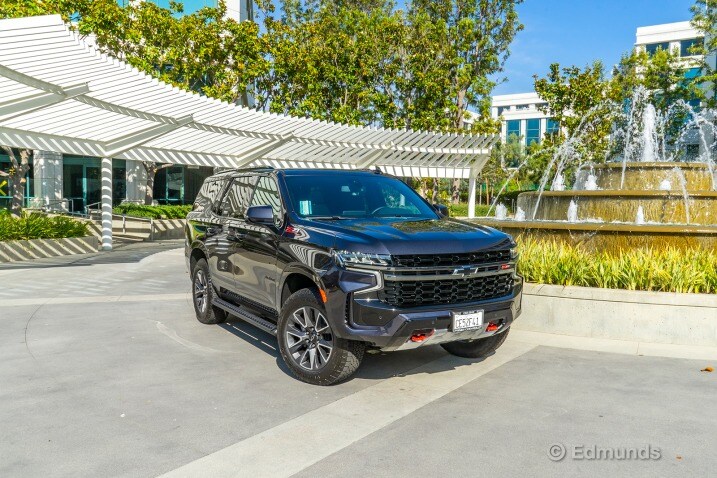
Several GM vehicles benefited handsomely from the CARS program even though overall sales levels remained below a year ago. Small cars including the Chevrolet Aveo, crossovers including the new Chevrolet Equinox, and even somewhat-forgotten models such as the Chevrolet HHR all saw smart sales increases as GM customers traded in clunkers for these relatively fuel-efficient models.
And GM executives also were happy to report that American consumers have demonstrated little concern about GM's plunge into bankruptcy, now that the company has emerged so quickly.
"Bankruptcy talk and issues are clearly getting behind us," DiGiovanni said, "especially in the rest of the world." In the United States, he said, "this is significant because of negative publicity going back to November of last year. A lot of that affected our sales early this year and in the spring. But we aren't seeing as much degradation as we had [feared]."
GM executives focused positively on domestic-market results for July that saw their retail sales decline by 9 percent while fleet sales plunged by 47 percent. Several factors are afflicting fleet sales, especially the recession in business activity.
Retail sales were GM's highest in ten months, thanks largely to the cash-for-clunkers program, and the company picked up 0.2 percentage point of retail market share compared with July 2008, DiGiovanni said. GM's 19.4-percent total market share for the year through July is nearly a percentage point higher than the 18.5-percent share that GM had specified as its target in the viability plan it presented to the federal government as part of the bankruptcy process.
Sales for the "core" brands that GM will carry forward - Chevrolet, Cadillac, Buick and GMC - were up 12 percent in July compared with June, LaNeve said, while sales of the "non-core" brands that GM plans to eliminate - Hummer, Saturn and Pontiac - were down 12 percent.
The executives were enthused about the fact that GM announced a move to re-enter the leasing market on a limited basis, through a pilot program with U.S. Bank in five states. Dealers will be able to offer corporate leases on what LaNeve called "critical" Cadillac products.
Since the beginning of the year, LaNeve said, GM figured that its almost entire absence from the leasing market has cost the company one to two percentage points of overall market share.
"GM's leasing penetration in June and July was less than one percent," noted Jessica Caldwell, Edmunds.com's director of Pricing and Industry Analysis. "A year ago, that was 17 percent. So it's time for GM to capitalize again on lease customers and hopefully to pump up their sales volumes."
Ford: Seeking to Maintain Its Edge
Ford posted the first sales increase for any month this year by any of the major automakers in the U.S. market: 2 percent overall, compared with July 2008, to a total of 158,838 units.
Arguably, Ford did the best job of capitalizing on the CARS program. At the same time, however, it's pretty clear that Ford may have needed the boost from the cash-for-clunkers phenomenon the least of any of the Big Six automakers.
"Ford has had a real momentum shift over the last few months," said Edmunds.com's Caldwell. "They've been able to talk about their products a lot, rather than their woes," because Ford was the only one of the Big Three automakers not to seek a U.S.-government bailout.
"That's resonating with consumers, rather than Ford having to focus on the news and on their own balance sheet," she said.
Ken Czubay, Ford's vice president of U.S. marketing, agreed that the company "had another strong month in progress before the Cash for Clunkers program started."
Indeed, even before CARS sent American consumers scrambling to auto showrooms last week "like a grand opening at an Ikea store" - as Pipas put it -- Ford was "on a clear path to receive another [retail] market-share increase, our ninth in 10 months, as well as a total-share increasing including fleet deliveries," he said.
Then, Pipas said, "Cash For Clunkers put us over the top." Added Czubay: "Our products, our dealers and our advance preparation enabled us to leverage the program and drive traffic and sales to another level."
Among Ford's early preparations for the CARS program was a Web site that offered a calculator for consumers trying to figure out individually how they could benefit from the program. It had logged more than one million visitors by last Friday, Pipas said. The web site helped Ford "come out of the gate strong" with cash-for-clunkers, Caldwell said. "Ford took the market a little bit by storm."
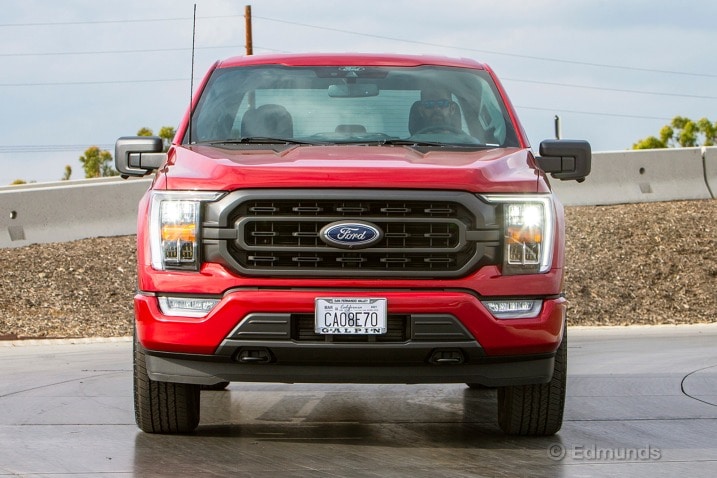
Certainly, Ford and its dealers benefited from the company's recent decision to boost production of its smaller and most fuel-efficient vehicles, including Fusion and Focus. Fusion sales in July were up 66 percent compared with a year ago, and sales of its Mercury sibling, Milan, were up 60 percent.
Sales of Escape, Ford's long-popular mid-sized SUV, were double a year ago July to a new monthly record. Even Ranger, Ford's hoary but fuel-efficient compact-pickup model, saw July sales up by 65 percent.
One sign of Ford's underlying strength is that it still continued to "de-escalate incentive spending," as Pipas noted, during a season when incentives typically climb. At the same time, he said, Ford and its dealers are learning to sell effectively out of overall lower levels of inventories than those that have been conventional in the industry.
Chrysler: Rebounds For 9-Percent Slide
With several models seemingly buoyed by the rip-roaring one-week response to July's Cash-For-Clunkers program, Chrysler Group LLC sprang back with a performance that saw several models win huge sales increases compared with a witheringly low June.
Overall, however, Chrysler still posted a 9-percent sales decline for July - and only three individual models have moved into positive sales territory for the year in which the company's sales volume still is off by a heavy 42 percent.
Chrysler's top performers for July mostly were models that were obvious cash-for-clunkers trade-bait. And each model that posted a year-over-year sales increase enabled buyers to qualify for a Cash-For-Clunkers voucher.
The Chrysler brand had one model, the PT Cruiser (recently stayed from its planned discontinuation), posting a July sales hike; the PT improved by 24 percent over last July to crank out 4,092 units.
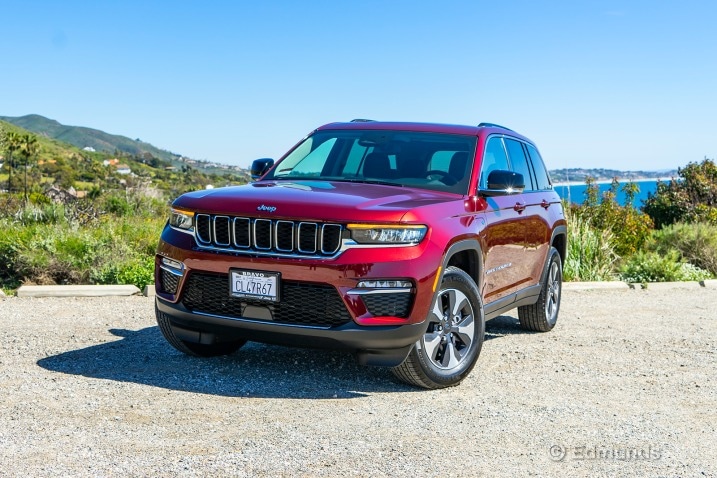
The big gains came from the three models derived from Chrysler's compact-car platform. The Dodge Caliber recorded a 63-percent sales hike and the Jeep Patriot and Compass increased by 134 percent and 95 percent compared with last July.
Dodge's midsize Avenger likely benefited from cash-for-clunkers, posting 5,616 sales that accounted for more than a quarter of the car's year-to-date total. And the Journey compact crossover moved to a 21-percent July improvement, while even the Caravan, a segment leader that has nonetheless slumped all year, posted a 37-percent sales hike for July.
Chrysler's July incentive that doubled eligible cash-for-clunkers rebates obviously was successful in terms of enticing customers. But Edmunds.com data analysts also say Chrysler's Total Cost of Incentives figure of $4,366 for July led the Big 7 automakers.
Aside from July's clear success stories, there remain more troubling performances in Chrysler's lineup. The Jeep brand was off by just 2 percent in July but remains down 36 percent for the year. And the Wrangler line, Jeep's backbone, seemingly was scavenged in July by its Patriot/Compass showroom-mates: Wrangler was off 25 percent for a July that also pulled down its year-to-date performance to just 2 percent better than last year.
Chrysler's Sebring didn't score with consumers nearly as well as its Dodge Avenger counterpart, with sales off 27 percent in July, while the 300 fullsizer dropped 40 percent and is down 51 percent for the year with just 21,591 units sold through July.
Chrysler's trucks and SUVs were pounded in July. The Ram's 17-percent slide was the best performance in a group that absorbed big losses, including a 72-percent plunge for the Dakota (other manufacturers' midsize pickups appeared to benefit from cash-for-clunkers eligibility) a 32-percent drop for the Dodge Nitro and a 33-percent decline for the Jeep Grand Cherokee.
And according to Edmunds.com data analysts, Jeep's Commander (which has been discontinued) endured its worst sales month since it went on sale in September, 2005, recording just 522 sales in July.
Toyota: Gets Clunkers Boost But Still Down For July
Like many mainline manufacturers, Toyota Motor Sales USA Inc. boasted of a big July sales gain - compared with a dismal June.
And like many competitors, Toyota got a marked sales boost from the Cash for Clunkers program, but one week of clunkers-related action wasn't enough to salvage a month that still saw sales decline 11.4 percent compared with last July.
Toyota's July sales improved over June by 27.7 percent, but the month didn't turn out to be all that special, as sales of the several mainline vehicles - including the Camry and Corolla, still nosed downward. The Corolla slid by 14.1 percent despite obvious Cash for Clunkers attraction, and the Camry declined by 19.4 percent (and remains down by a significant 34.3 percent for the year).
Edmunds.com data analysts note an encouraging trend for Toyota, however: Toyota once again downshifted its incentive spending. Toyota's July Total Cost of Incentives averaging $1,327 per vehicle was an eleven-month low.
Nonetheless, Toyota's comparative frugality with incentives seems to have hurt. Every model in the company's Scion division qualified for a Cash for Clunkers rebate, yet each model's July sales retreated: the xB dropped 44.1 percent, the tC plunged 59.5 percent and the xD declined by 3 percent.
Gainers for the month were few. Most prominent on the list was the new 2010 Prius hybrid, which jumped to a 29.7-percent gain that may or may not have been clunkers-fueled. The Prius was the only car from the Toyota, Scion or Lexus divisions to score a sales increase in July.
Toyota's trucks and crossovers fared better. The compact RAV4 jumped 32.5 percent and the Highlander midsizer gained by 39.1 percent, while the Tacoma improved by 7.6 percent. Lexus' popular RX crossover chipped in with a 10-percent gain, the only Lexus model to post a July sales gain.
July nonetheless was Lexus' best sales month of the year; the division moved 18,517 units, bolstered by 7,811 sales just from the RX lineup. Lexus sales remain off by 31.3 percent for the year, Toyota's by 34.2 percent.
Not a single model from any Toyota division has broken clear of negative numbers for the year, in fact, and most are off by healthy double digits. Year-to-date declines range from 5.9 percent for the RAV4 to 57.4 percent for the Scion xD to a peak of -61.9 percent for the 4Runner SUV.
Honda: C4C Doesn't Save Its Hide
Although almost all of American Honda Motor Co. Inc.'s models made buyers eligible for cash-for-clunkers rebates, Honda still couldn't pull out of its recent sales doldrums, recording July sales down 17.3 percent compared with last year.
Honda's results weren't helped by a 32.5-percent plunge at its Acura upscale division, which moved a scanty 8,662 units for the entire month.
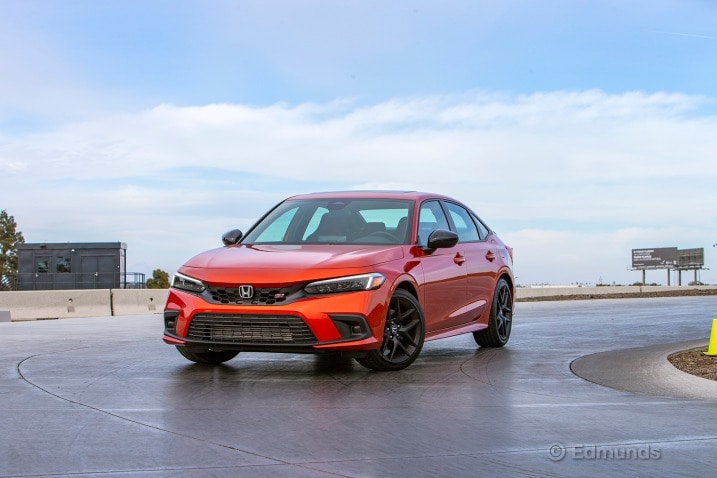
Sales for Honda's most popular - and fuel-efficient - models seemingly did respond to the cash-for-clunkers incentives. The Civic compact car was up by 3.1 percent and the trusty CR-V, which had declined in recent months, climbed by 9.9 percent. Both models remain down for the year by a respective 36.2 percent and 19.3 percent, however.
Strangely, though, the Fit subcompact endured a 27.6-percent decline. And another niggling factor hit the Civic Hybrid, a model that presumably would benefit from buyers looking to maximize the cash-for-clunkers payoff: sales for the Civic Hybrid plunged 71.8 percent - likely due to the new showroom presence of the roomier, more-efficient and perhaps more versatile Insight hybrid.
"Strong interest from the CARS (Car Allowance Rebate System, the official name of cash-for-clunkers) program increased dealership traffic late in the month and contributed to Civic and CR-V sales gains," said John Mendel, executive vice president of American Honda Motor Co., Inc., adding that, "July was our highest-volume month so far this year."
Honda's Accord midsize sedan slid by 28.1 percent and every other Honda-badged model except the Civic and CR-V dropped, including a 48.3-percent decline for the Odyssey minivan and a 55.5-percent decline for the Ridgeline midsize pickup, to just 1,184 sales.
Furthermore, every Honda and Acura model is down by double digits for the year, ranging from a 19.3-percent decline for the CR-V to 66.4 percent for the Civic Hybrid.
At the Acura unit, the flagship RL was off by a stunning 75.4 percent to just 131 units sold in July; the RL has found just 1,192 buyers so far this year.
Honda's MDX and RDX crossovers were off by 28.9 percent and 62.5 percent respectively and even the entry-level TSX was down by 35.8 percent. Acura's July sales did gain 4.6 percent compared with June, however.
Nissan: Struggling for a Foothold
Nissan North America executives didn't mention the CARS program in their press release about July sales. Perhaps that's because their sales for the month were 25 percent lower than a year earlier, at 71,847 units, despite the cash-for-clunkers program that generally favored Japanese brands.
However, Nissan did post its best month of the year in terms of absolute sales numbers, finally getting back over the 70,000-unit mark for the first time in 10 months. But with a market share of just 7.2 percent, they remained the lowest of the major OEMs.
Only two models sold more in July than a year earlier: Rogue, and the 350/370Z family.
Meanwhile, sales of Nissan and Infiniti trucks and SUVs tanked: Sales of the redesigned FX were down 61 percent; EX, down 51 percent; Xterra, down 76 percent; Armada, down 72 percent; and the Titan pickup, down 63 percent.
The uniquely styled Nissan Cube continued what the company called a "strong launch" with sales of 3,293 units in July.
Hyundai Group: It's All Good
No playing the "spin" game in July for Hyundai Motor America: sales improved compared with last month (most makers' did). Sales improved compared with last July (many makers' didn't - despite the injection of Cash-For-Clunkers buyers). And incentives were the company's lowest for the year.
You probably could call that "win-win-win."
The Hyundai group's July sales - which includes the performance of Kia Motors America - actually were better compared with last year (a 16-percent jump) than with last month, over which sales improved 9 percent.
Hyundai noted the definitive boost the two brands - whose lineups are comprised largely of small and fuel-efficient models - enjoyed from the late-July implementation of the Cash-For-Clunkers program and called for the U.S. Senate to approve an additional $2 billion in funding the House already agreed to inject.
No surprise. Hyundai and Kia were clear winners in July, a situation no doubt aided by the brand's potential in the Cash for Clunkers equation. Hyundai's three primary car lines, Accent, Elantra and Sonata, posted respective gains of 13 percent, 30 percent and 17 percent. Total Hyundai sales were up 12 percent compared with last July.
The brand's new Genesis luxury sedan and sport coupe line kicked in 2,015 units - and Hyundai's full-year sales are trailing 2008 by just more than 20,000 units. Hyundai's crossovers all lost ground in July, though not by serious amounts.
At Kia, it was a July sales record, fueled by cash-for-clunkers and the injection of two promising new models, the Soul (an addition to the lineup) and the Forte, replacement for the well-worn Spectra. Kia said in a release the strong July boosted the brand's market share to a record 3.1 percent.
The overall sales volume of 29,345 units for Kia in July represented a 4.7-percent gain over last year, with the Soul/Forte combination contributing 8,484 units to the total.
Year-to-date sales for Kia still lag 2008's total, however, 176,749 units to 2008's 185,640.
BMW: Dives 27 Percent
The BMW Group (BMW and Mini) slid nearly 27 percent in July as BMW was clipped by having little Cash for Clunkers potential and Mini (probably seeing some C4C benefit) hanging on by dropping just 3.8 percent for the month.
The new Z4 roadster, posting a 33.8-percent increase and the all-new 7-Series, posting a 14.5-percent jump, were joined by the X6 crossover's 54.6-percent increase (to 634 units) as the lone July bright spots for BMW. The brand endured sharp drops for its primary lines such as the 3-Series (-29.3 percent), 5-Series (-45.1 percent) and 1-Series (-31.5 percent), not to mention a 71.3-percent plunge for the X3 crossover.
The BMW brand itself declined by 31.5 percent and is off 29.3 percent for the year.
At Mini, the recent introduction of the Cooper Convertible on the latest-generation chassis and the coming of summer helped propel convertible sales by 45.1 percent. That was offset by declines of 6.9 percent for the hardtop Cooper and Cooper S and a decline of 19 percent for the correlating Clubman models.
Mini is down 18.1 percent for the year.
Audi: Inventories Depleted
Audi sold 6,407 vehicles in July, down only 6 percent from a year ago.
Audi sold 4,866 cars and 1,541 SUVs. The Audi A8, A3, A4 Avant and TT coupe sold more in July than in any month in 2009. Demand for the Audi Q5 is strong, with sales of 1,023 in July and inventories low. Audi said inventories of the S5 and Q5 are also depleted. Like sister division Volkswagen, diesels are taking a growing chunk of the sales. About 28 percent of all Q7 sales in July were diesel powered.
Audi dealers saw a noticeable increase in showroom traffic with the Cash for Clunkers launch but sales attributable to the program were less significant than they were for volume, mainstream automakers. Plus, the automaker already was low on inventory.
"Audi didn't need CARS in July, we needed cars," said Johan de Nysschen, President, Audi of America. "We had anticipated a good month relative to the market, and we started very strong. We simply ran critically short of key models and popular configurations. Otherwise, July would have been stronger."
Subaru: Record Month
Subaru sold 21,839 vehicles in July, a 34-percent increase from July 2008 for its its best sales month ever. Every model in Subaru's line but the Tribeca had a double-digit increase, ranging form 33 percent to 41 percent. The Forester and Impreza had personal bests for the month.
"The month started strong and gained momentum with the 2010 Legacy and Outback launches," said Tim Colbeck, Subaru's senior vice president of sales. "We were in a position for a very good month already, but when the CARS program hit, things went to the next level."
Volkswagen: Diesel Momentum Continues
Volkswagen sold 20,590 units, representing a 0.7 percent increase over July 2008, with diesels selling well during the cash for clunkers program.
Jett sales were up 31 percent; Tiguan sales rose 29 percent. Other VW models saw double-digit declines.
Volkswagen diesels -- Jetta, Jetta SportWagen and Touareg TDI -- posted their best sales month since their re-launch with 6,320 units sold -- accounting for more than 30 percent of total sales. The Jetta SportWagen posted its best month for the third consecutive month with 2,415 sales. Diesels represented 81 percent of SportWagen sales and 40 percent of Jetta sedan sales.
For the year, Volkswagen has sold 117,598 vehicles, down 14 percent from the January-to-July period in 2008.
Mazda: Mazda3 a Hit with Clunker Traders
Mazda reported sales of 19,032 vehicles, down 15.1 percent from a year ago.
Mazda said it had seen a marked increase in showroom traffic as a result of cash for clunkers, with some dealers reporting they hadn't seen this many qualified customers coming into their showrooms in more than a year.
While our total sales numbers still don't show we've turned the corner on this dismal market, we're obviously very pleased - and quite surprised - by the showroom traffic improvement the cash for clunkers program has provided," said Mazda North American President and CEO Jim O'Sullivan.
O'Sullivan said the program is also having a positive environmental impact. "Our dealers are reporting that cars like the Mazda3, which gets up to 33 miles per gallon on the highway, are replacing vehicles that in some cases don't make one third of the mileage."
Mazda said 57 percent of Mazda models sold under the cash for clunkers program were for the Mazda3. The Mazda5 also benefited, with sales up 45.5 percent.
For the year to date, Mazda has sold 119,413 vehicles, down 32 percent from January-to-July 2008.
Suzuki: Still Down Big
Suzuki sold a mere 3,507 vehicles in July, down 57 percent from July 2008, but up 39 percent from June. Its SX4 had the smallest decline from a year ago and that was still a 24-percent drop.
Mitsubishi: Sales Half of Year Ago's
Mitsubishi sold 4,847 vehicles in July, half of what it did in July a year ago.
Still, Mitsubishi pointed out, its July sales were up 11 percent from June for its third consecutive month of increased sales. And Mitsubishi executives said showroom traffic rose sharply, thanks to Cash for Clunkers.
Porsche: Books Closed on Bad Year
Porsche sold only 1,544 vehicles in July, about half of what it sold in July a year ago but up from June. The company sold a mere 352 Boxster/Cayman models compared with 1,095 a year ago, only 651 911 models compared with 1075 a year ago, and 541 Cayenne units, down from 958 last July.
Porsche in North America just closed its fiscal year on July 31 with sales for the period at 19,024, down from 31,818 in its last fiscal year.
By Dale Buss, Bill Visnic, Michelle Krebs
Analysis by Edmunds.com analysts Jessica Caldwell, Ivan Drury, David Greene
Photos by manufacturers
1- Chevrolet Equinox
2 - Ford Escape
3 - Jeep Patriot
4 - Toyota Prius
5 - Honda CR-V
6 - Nissan Cube
7 - Volkswagen Jetta SportWagen
8 - Mazda3
Posted by Michelle Krebs at 12:09 PM under Analysis , Chrysler , Companies , Featured , Ford , GM , Toyota | Comments (9) | digg this | Seed Newsvine


"Perhaps that's because their sales for the month were 25 percent lower than a year earlier, at 71,847 units, despite the cash-for-clunkers program that generally favored Japanese brands."
Actually the Detnews said 47% of cars purchased under the program were domestics. How does that line up with the assertion that the program is more beneficial to Japanese brands when overall domestic marketshare is 44%?
Posted by: 1487 | August 04, 2009 at 5:02 AM
The predictions issued a few weeks back about July sales were off except for GM. What happened to Chrysler being down 39% from last July? Or Ford being down 4%?
Posted by: 1487 | August 04, 2009 at 5:07 AM
...From the folks that orchestrated Hurricane Katrina relief...
The C.A.R.S. will need some tweaking if demand remains strong for the most popular models being sold under it. Here's a tweak:
A provision for factory orders should be put in place to help smooth out the demand and better forecast production. Otherwise, convoy after convoy of auto transports will arrive at dealerships with no more customers. 1.Move the $3500/$4500 qualifiers down $1500 each for in-stock purchases; full amount for order outs. 2.Adjust the amounts up or down by $110 for each day over/under the national average 60- day supply of all of the qualifying models combined. 3.Provide an absolute, permanent ending date.
Posted by: fulcrumb | August 04, 2009 at 6:52 PM
The dealers don't have any inventory on their lots. What are they going to do when the "CARS" money runs out? I think they should use the money to put people back to work, so they can afford to buy cars, homes,ect.!
Posted by: metro659 | August 05, 2009 at 5:41 AM
Fulcrumb - it was a different administration that gave us Katrina relief.
Posted by: guy1974 | August 06, 2009 at 8:08 AM
IMHO, the CARS program only benefits the auto makers. Prior to my '89 MPV's registration and smog test came up in July, I considered to replace it. In the end of June and beginning of July, there were tons of manufacturer rebates and dealer discount. I could easily found a Honda or Toyota dealer that would sell me a Sienna or Odyssey at a minimum of 3500 below MSRP. Guess what? When the CARS program started, no more rebate and heavy discount. If I were to trade in my clunker, I would have ended up paying almost same amount of out of pocket $$$. At the end, I renewed my registration. The smog test came back as clean as any late model cars.
Posted by: fredvu | August 20, 2009 at 10:50 PM
As a freelance writer, this was a gonzo story, the Clunker Program so I really pursued it as is the mission statement that surrounds my profession dictates. I also have been in the past employed as a Fleet Vehicle Sales Manager so I was able to treat this story with some credentials in the industry. Just as I oppose the government administering a public health care program, I did not agree with this decision and if it had to fly, represented another example of why the Federal Government should not be running businesses. Tedious and error prone paper work will rear it's ugly head as a profit slicer when the dealers figure what their net is. Dealers will get their $4,500 checks but when. I am sure that there was the typical margining and leveraging that shrinks the net also if those checks come in six months. Junking the cars have not been fully costed out. Finally. #1 was Toyota Corolla and I have owned at least 5 of them in my 58 years. You are all car enthusiasts so I do not have to explain that one. Cobalt brought up the rear and I believe 8 out of ten were foreign. I will tell you that the only way to sell a car is right then and there in the showroom and you drive away. Now Hyundai. Toyota and Honda will get the green light for all the profitable aftermath money. Who thought of this?
jayadler1
Posted by: jayadler1 | August 24, 2009 at 12:24 AM
This was a genuinely comprehensive article and necessarily correct in a factual sense. I see a problematic issue in forecasting the future, I must say in the case of GM mostly because we do not have crystal balls. As for vehicles, since 1987 I have bought alternating Camry's and Corollas until 2007 when I switched to Elantras while my wife stuck to Olds, GM and for the last five years Accords. I made the decision to go to Hyundai because while there was some discussion at the dealership which I always am prepared for, the sales force was negotiable and hungry. The price was noticeably lower with more features and a lower payment. I have never had a reliability problem with any of the Asian or Japanese vehicles. They run good and for a long time if you wish. I was under the impression that the top 10 in the Clunker Program were 1-8 Asian and Japanese. If I am right then I guess the foreign models are not going to go for dealer service, accessories warranties to wit the aftermath.to American concerns. That revenue is very important and to the winner goes the spoils. The argument that buying American reflects on consumer patriotism does not hold in 2009. The foreign manufacturers whether they are totally imported or maintain manufacturing facilities both here and overseas have a massive presence here in the USA. Count the taxes they pay and rent, the number of American workers, executive offices and the list goes on. What this means that for the big manufacturers, no matter where their origin remains, you are supporting the American economy.I did purchase 400 shares in Ford because I think that they will run the table with the Taurus, Mustang and Focus. It is interesting that I plan to keep my Elantra, it is dependable, affordable and at my age that about does it.
Posted by: jayadler1 | September 15, 2009 at 7:54 PM
I think that a "weak sister" but nevertheless upcoming force in the car industry will be the Certified Vehicle market. I neglected to mention that at least three of the vehicles that I have purchased were off lease certified. You have to know how to initially troubleshoot a vehicle on the lot to the best of your ability and drive it. At that point and you will be provided with Carfax you can even ask for a brake job or a tranny tune up prior to purchase and most dealers will comply, plenty of room in these sales. My wife is currently driving a 2003 Honda Accord EX, I purchased it as certified loaded, for $14,000 and Honda had a program so the payment for us is $140/mo. This car has 50,000 miles as we live in a small Village and she does not go far. At any rate I have never had any issue with this vehicle and there is not a scratch on it. I know that there are myths about car dealers and their methodology. My experience is that you will pay more than a private sale but functionally, the dealer is way safer to do business with because he has to maintain the trust of the community ultimately. If you like although it may cost, you can upgrade the warranty on a certified vehicle to rival a new one.
Posted by: jayadler1 | September 16, 2009 at 9:59 AM