Automakers See Glass Half-Full After Flat November Sales
December 02, 2009
U.S. auto sales clocked in about flat in November compared with a year ago -- and in line with widespread expectations that the market will only gradually creep upward for at least the next year. But industry executives and analysts mostly chose to interpret the American auto market as a glass half-full.
November sales were 746,544 vehicles compared with 743,605 in November, 2008. On an absolute basis, that number of units represented a 0.4-percent year-to-year monthly sales increase -- or call it flat. But taking into account the fact that the industry enjoyed two fewer "selling days" this year compared with last November, sales actually increased by 9.1 percent last month on an apples-to-apples basis.
"It could be worse," said Edmunds.com Senior Analyst Jessica Caldwell. "The fact that sales are stabilizing and increasing bit by bit each month is good news. The fact that they're not getting worse is a definite sign of promise."
Ken Czubay, Ford's U.S. sales chief, said: "The black clouds are clearing, and we have guarded optimism for December."
Nevertheless, a sales chief of the year's best-performing brand was among those holding a minority view. "We were, quite frankly, hoping that the economy and overall industry would have bounced back a bit more than we are seeing right now," said Dave Zuchowski, vice president of sales for Hyundai Motor America.
Second Straight Month of 10 Million SAAR
Giving the overall nod to optimistic shading were a couple important factors besides the sales numbers per se. First, the closely watched seasonally adjusted annual rate of sales inched upward to 10.89 million units compared with 10.8 million units in October and a pace of 10.37 million units in November, 2008. November marked the second consecutive month the SAAR was above 10 million.
"The month was notable in that the industry succeeded the 2008 pace for only the second time this year -- and more notable because it was the first time the industry exceeded last year's pace" without benefit of last summer's federal Cash for Clunkers program that created a sales spike in July and August, said Robert Carter, group vice president of the Toyota division of Toyota Motor Sales U.S.A. "That's a real good sign for the industry."
Economy on the Mend
Second, commentators Tuesday interpreted the mixed economic tea leaves as positive on balance for the U.S. auto industry, fueling their collective conviction that a continued ever-so-gradual recovery is in the cards.
"There's a modest economic recovery that is underway," said Emily Kolinski Morris, Ford's chief economist. "Slow but sure is the best way to describe consumer and business activity."
Kolinski Morris and others cited favorable recent indicators including upticks in consumer income, spending and confidence as well as some stabilization in the housing market, a weak dollar that encourages exports, the strengthening of U.S. corporate balance sheets, and a string of stronger monthly readings of activity by the American manufacturing sector.
Jobless Constrain Recovery
On the other side of the ledger looms one huge offsetting factor: the ever-increasing rate of U.S. unemployment, which continues to dampen any economic recovery as well as keep a lid on rosier expectations for the near future. "Jobs remain top of mind, holding spending in check," Kolinski Morris said.
Other negative indicators are credit conditions that "are still tight as banks remain cautious," according to Michael DiGiovanni, executive director of global industry analysis for General Motors.
But Caldwell dismissed concerns that joblessness and other stubborn weak spots in the economy could introduce a "double-dip" recession that some economists still fear.
"I don't see that happening today," she said. " It looks like things are on their way to being steady."
Caldwell and others cited a number of underlying reasons for coming down on the side of their optimistic interpretation of November results and portents for the future.
For one thing, she said, the spate of new and very recent products coming out of Ford and GM are being almost universally embraced by American consumers -- suggesting that as the two strongest domestic automakers continue to introduce new and upgraded models, their prospects will continue to improve.
"It's easy to take for granted that these products would do well and are selling," Caldwell said. "They easily could not be doing well. They've been promising us better products for some time, made for the U.S. market, more evolutionary -- and it looks like they're doing that."
Stable Gas Prices a Plus
Stable gasoline prices over the last year and a half, within the range of $2.50 to $3 a gallon, also have caused American consumers to take closer looks at segments such as pickup trucks and large sport-utility vehicles that got slammed by $4-a-gallon gasoline in the summer of 2008.
"People who need that type of vehicle now are getting more comfortable with the stabilization of oil prices," said GM's DiGiovanni. "We're benefiting from a nice lull at the pump." However, DiGiovanni also noted GM's forecast for a long-term re-escalation of oil prices as global economies recover.
A Merry December and Happy New Year?
Edmunds' Caldwell believes that such factors may contribute to an even more solid December. "It could be a pretty strong month, and better than the normal seasonality that makes December a strong month," she said. "A lot of people who are deal-seekers out there have been waiting for a good time to buy. There's a lot of pent-up demand."
For the time being, at least, OEM executives also foresee a continuation of the gradual recovery. Most still predict full-year sales for 2009 of about 10.5 million units in the U.S., compared with last year's 13.2 million units.
Next year should bring about 11.5 million sales in the U.S., according to both GM and Toyota forecasts. "Our production forecast for the first quarter reflects mild improvement in the overall industry," said Toyota's Carter.
DiGiovanni called for "the industry starting to strengthen without the aid of any stimulus like Cash for Clunkers." But he's "not expecting a huge burst" in sales during the first quarter and is anticipating a seasonally adjusted rate of just under 11 million units for the period.
"Recovery will be very slow," he said. "But it'll be a lot better than running [a seasonal rate] in the 9 millions as we were in the first quarter of this year."
GM: Claiming To Exceed Expectations
While most attention on Tuesday was focused on the departure of GM CEO Fritz Henderson, much more quietly the company posted respectable sales of 151,427 units for November, down about 2 percent in absolute terms compared with a year earlier but up more than 6 percent per selling day.
GM executives highlighted what DiGiovanni called the "strong performance" of the company's four surviving U.S. brands -- Chevrolet, Buick, Cadillac and GMC -- which accounted for 94 percent of its retail sales in November. Those brands' sales rose about 10 percent in November compared with a year earlier.
DiGiovanni also hailed the fact that GM nabbed 20 percent or more of the retail market for the third consecutive month in November and attributed the result mostly to "the fruition of our launch-product success."
Indeed, GM has introduced a steady stream of new vehicles and new versions of existing models over the last several months, mostly to critical acclaim. Among the hottest sellers are the new Buick LaCrosse, new Chevrolet Camaro, new Chevrolet Equinox and new Cadillac SRX. GM's total of six "launch" vehicles comprised 22 percent of its retail sales last month, and volume was 6 percent higher than in October.
"We have a strong performance pretty much across our portfolio, which is encouraging," DiGiovanni said. "Our sales clearly are shifting to where the market is shifting."
More buyers of its new vehicles are opting for four-cylinder versus six- or eight-cylinder engines, for example. Dealers are fielding a surge of orders for the four-cylinder version of the LaCrosse, which isn't due in showrooms until January sometime.
"Customers don't want to compromise on amenities," said Susan Docherty, GM vice president of U.S. sales. "They just want something that's more fuel-efficient."
DiGiovanni also noted that GM's average transaction price rose smartly in November over a year earlier and are highest in the industry. At the same time he acknowledged that the company "has got work to do to get our incentive load down," and he said that GM's average incentives declined by $1,416 in November compared with a year earlier, about twice the industry-average reduction. "So we're improving more than the industry, and in the right direction," he said.
"In the new GM, we want to be earning share, not buying it, and the new products help us spend less on incentives than before," Docherty said. "People loved Pontiac and Saturn but the vehicles were heavily incentivized and weren't profitable."
The percentage of GM sales that were closed via lease rose to 3 percent in November from 2.5 percent in October, a far cry from as high as 20 percent a couple of years ago before last year's market downdraft and credit crunch essentially shut off the company's access to leases through GMAC. GM's long-term goal for leasing is to raise it back up to 8 percent to 9 percent of sales -- which is about the level at which its 2010 models already are being leased, DiGiovanni said.
Toyota: Moving Past the Recall
Toyota has been dealing with its own major distraction in the form of its recall of 3.8 million vehicles for a gas-pedal problem. But the company managed to report November sales of 133,700 vehicles, an increase of nearly 3 percent on an unadjusted basis.
"Toyota came in pretty strong, and higher than we may have thought a few weeks ago," said Edmunds.com's Caldwell.
For Toyota, a huge part of its performance was big lease incentives, she said. "And some of the incentives on their leases were very high, too. The programs resonated well."
The company's lease penetration of 21 percent was boosted by record-high levels of leasing of some of its highest-volume models, including Camry (39 percent leased, the highest ever), Corolla (29 percent, also a record high) and RAV4 (33 percent, highest ever). In turn, Camry and Camry Hybrid sales climbed an adjusted 18 percent over November 2008; Corolla sales rose more than 9 percent; and RAV4 sales were up a whopping 35 percent over the same period last year.
Another significant accomplishment for Toyota during the month was beefing up its once-depleted inventories. Continuing to crank up production of many of its U.S. models, Toyota closed November with 50,000 more units in dealer inventories than at the end of October and "very close" to its goal of 200,000 vehicles in stock across the retail network by the end of the year, Carter said.
"This means our dealerships have an excellent selection of everything," he said, "positioning us very well to close out 2009."
Even Prius, the hybrid that has been in extremely short supply for several months mainly due to production issues, now is in much more ample supply. It was up to a 21-day supply in November after being stuck in low-teens numbers for some time. "We're pleased to get out of that situation while maintaining and actually accelerating sales," Carter said.
Lexus also seems to have resumed its stride and is demonstrating that some life is returning to the luxury segment. Its sales were up 24 percent compared with November 2008, on an adjusted basis, and up 16 percent compared with last month.
"Our market share of 2.5 percent of the entire industry was the highest for November in our 20-year history," said Mark Templin, group vice president and general manager of the Lexus division.
The sales leader for Lexus was its new RX utility vehicle, which posted November sales of nearly 8,000 units, up an adjusted 47 percent compared with the version sold a year ago.
However, Toyota hasn't been able to escape the shadow cast by its huge recall of vehicles in which the accelerator pedals could be jammed by the floor mat, potentially causing unintended acceleration. The company is having dealers shorten the length of the pedals beginning in January while the company develops and produces replacement pedals by April.
Carter said that Toyota is looking for signs that the recall and attendant publicity has affected sales but hasn't seen any yet. Neither would Toyota executives reveal the cost of the recall to the company.
"We hope [customers] realize when we're finished that we stand behind our product, and their safety is paramount in our minds," said Irv Miller, Toyota's chief spokesman.
Ford: New Plus Old Equals Flat Sales
Ford's November sales results showed distinctly two Fords: the evolving Ford with new, fuel-efficient cars and crossovers and the old Ford of truck-based models.
The "new" Ford models are marketplace gangbusters, noted Edmunds.com's Caldwell. The Fusion, Taurus and Focus all saw year-over-year sales increases. But old Ford truck-based models, including Explorer, saw sales plummet nearly 20 percent.
Sales of the redesigned Taurus soared 54 percent from a year ago. Similarly the Ford Fusion, redesigned for the 2010 model year, had a 54 percent hike, putting it on track for a full-year sales record, surpassing the 2007 record. Focus sales shot up 52 percent to a new November sales record. The Ford Edge had a 27 percent increase. Mercury Mariner sales edged 5 percent higher. Ford's hybrid sales, at 2,361 vehicles, skyrocketed by 73 percent. New models chipped in as well. Ford sold 1,165 Ford Transit Connects, 648 Lincoln MKTs.
Ford also has done an extraordinary job of launching 2010 models and cleaning up leftover 2009s. It had the highest percentage of 2010 model sales of the Big Three, at somewhere in the 80-90 percent range of November sales being 2010s.
Those vehicles are loaded with content -- such as the pricier EcoBoost engine and Sync entertainment system -- which generates higher transaction prices, noted Ford's U.S. sales chief Ken Czubay, adding that Ford is spending less on incentives.
And Ford's November retail share rose for the 13th time in 14 months, the first upward trend since 1995.
In the end, Ford's November final results came in even with a year ago. Sales of Ford, Lincoln, Mercury and Volvo vehicles totaled 123,167 units, within a few hundred units of November 2008 sales. Excluding soon-to-be-sold Volvo, Ford's core brands sold 118,536 vehicles, even with a year ago. And November sales were lower than Ford's yearlong monthly average of 135,405, according to Edmunds.com calculations. Its stock price is headed in the opposite direction, hitting a 52-week high on November 18 of $9.14 a share.
Ford brand sales totaled 105,133 for a 2.0-percent increase over last year. Lincoln sales totaled 6,409 units, down 20.1 percent; Mercury sales fell 9.7 percent to 6,994 vehicles. Sales for Volvo, which Ford likely will finalize its sale to Chinese automaker by early next year, had a 5.2 percent sales rise to 4,631 vehicles.
By segment, Ford's car sales were up 14 percent from a year ago. Crossover sales were up 26 percent. Truck and van sales fell 17.8 percent, which included a 20.8-percent drop in SUV sales and a 19.6 percent fall for the F-Series pickup.
Ford announced it plans to build 550,000 vehicles in the first quarter of 2010, an increase of 201,000 or 58 percent from the extremely low output of first quarter 2009.
Honda: Trucks Rise From the Dead; Cars Stumble
Despite hefty incentives -- at least for Honda -- November sales were the third lowest Edmunds.com has recorded.
Honda put more money than usual in incentives, mostly in subsidized leases. In fact, Honda's incentives on leasing were the highest of the year at $1,960 per vehicle, a 55-percent hike from October and the highest level all year, according to Edmunds.com. As a result, Honda's lease penetration hit its highest level of the year at 21 percent.
American Honda reported November sales of 74,003 vehicles compared with 76,233 sold in November last year. That's an increase of 5.5 percent adjusted for the difference in selling days but a decline of 2.9 percent on an unadjusted basis.
"We're finding opportunities for growth in multiple areas of the market," John Mendel, American Honda executive vice president of sales, said in a statement. "Consumer interest is returning in several segments, including light trucks.
Honda and Acura truck sales (including crossovers) rose 20.0 percent, on the strength of the Honda Pilot and CR-V as well as the Acura MDX and RDX.
Car sales fell 4.4 percent. The Honda Civic Hybrid had a particularly bad month, selling only 243 units, down 74.7 percent from last year's 1,043. Fit sales fell 21.0 percent. Acura TL and RL sales dropped by double digits as well.
Honda division had sales of 65,234 vehicles, an increase of 3.7 percent from a year ago. The Accord was Honda's best-seller for the month with sales of 17,239, up 7.5 percent. Other Honda models with year-over-year sales increases were the CR-V, up 24.8 percent and the Pilot, up 26.2 percent.
The just-launched Honda Crosstour, which is considered a truck, chipped in 485 units of sales. The relatively new Honda Insight hybrid chipped in 1,403 sales.
The Acura division appears to have bottomed out. Its sales increased 20.8 percent to 8,769, above Acura's 2009 monthly average of 8,638. The MDX led the charge with an increase of 79.3 percent to 3,465 vehicles. The TSX and RDX had gains, up 24,0 percent and 50.5 percent respectively.
For the year so far, American Honda has sold 1,043,641, a decline of about 21.7 percent.
Chrysler: Struggling But Some Bright Spots
While other automakers seemed to regain some footing, Chrysler continued to slide compared with last year. The automaker sold only 63,560 vehicles in November, down 25.5 percent (unadjusted; 19.9 percent on an adjusted basis) from the 85,260 it sold a year ago and for its third lowest sales month in Edmunds.com's recent records.
Worse, Edmunds.com estimates Chrysler's November sales could include close to 40 percent in less-profitable sales to fleets.
The October-to-November comparison, however, paints a brighter picture. In November, all three Chrysler brands posted a sales increase, when calculated on a daily sales rate basis (October had 28 sales days; November had 23). Chrysler sales were up 19.3 percent, Dodge 10.8 percent and Jeep 38.3 percent, on a daily sales rate basis.
Another bright spot appears to be Chrysler's good job of cleaning up carryover 2009 inventory and ramping up 2010 models -- a marked improvement from a year ago. In November, according to Edmunds.com calculations, Chrysler sales included 67 percent 2010 models, 29 percent 2009 models and 4 percent 2008 models. By comparison, Ford's November sales were nearly 90 percent 2010 models.
And while Chrysler has had some months during which absolutely no vehicle saw a sales increase, it had some models on the plus side last month compared with a year ago and October. Dodge Journey sales increased 93 percent from a year ago, setting a new November record. The Dodge Avenger had a 51-percent increase. The Chrysler Sebring sedan saw an 84-percent rise. The Jeep brand in total had a 14-percent hike from October.
Chrysler also had the largest year-to-year drop in incentive spending of the Detroit Three, though it is still high. Edmunds.com's estimate of Chrysler's Total Cost of Incentives (TCI) in November is $3,298 per vehicle compared with $3,753 per vehicle a year ago.
"The company showed some encouraging signs this month, providing a good foundation going forward and reinforcing our promising future, which everyone in the company is excited about," Fred Diaz, Chrysler sales chief who is also president and CEO of the Ram brand, said in a statement.
Nissan: Building Some Momentum
Nissan North America reported November sales of 56,288 units, up a resounding 21 percent from the year-earlier month.
The company didn't account for its November success but detailed it to some degree.
Nissan car-division sales, for example, were up nearly 42 percent, while truck sales rose nearly 12 percent. Vehicles with some of the biggest increases included Maxima (up 84 percent), Altima (up 43 percent), Frontier (up 71 percent) and Xterra (up 51 percent).
"Nissan's increase in sales is especially noteworthy because their incentive spending dropped during November," said Edmunds.com's Caldwell. Total Cost of Incentives for November for Nissan, calculated using Edmunds.com's proprietary formula, averaged $2,011 per vehicle compared with $2,248 a year earlier and $2,544 in October.
Meanwhile, however, the company's Infiniti luxury division just hasn't been able to find traction again. Its sales of 5,644 for November were fourth-lowest for a month ever recorded by Edmunds.com and close to Infiniti's monthly record low of 4,985 vehicles sold in January, 2002.
Hyundai, Kia March to New Heights
The Hyundai Group, including the Hyundai and Kia brands, sold 46,040 vehicles in November, a rise of 33.8 percent from a year ago (unadjusted; 45.5 percent adjusted).
Hyundai brand sold the bulk at 28,045 sales, a 46-percent hike. Sales for the year are up 6.2 percent to 401,267 vehicles sold through November.
November also marked Hyundai's 11th consecutive month of year-over-year retail market share gains. Dave Zuchowski, Hyundai brand vice president of sales, predicted Hyundai will finish the year with a full percentage of market share increase after a 3-percentage point rise in 2008.
The Accent, Elantra and Sonata had significant sales increases of 93 percent, 88 percent and 52 percent, respectively. The Santa Fe had a 53-percent sales rise. Genesis sales were up about as much.
Kia brand sales rose 18.3 percent to 17,955 vehicles. For the year so far, Kia has sold 279,015 vehicles, a 7.8 percent increase.
Kia said the Soul, Forte and Forte Koup accounted for 36 percent of the monthly sales volume, a 5 percent increase over the previous month. Kia's small cars delivered more than 55 percent of the brand's November volume. Kia soon launches the 2011 Sorento crossover, built in Georgia.
BMW Pulled Down by Plunging Mini
For the BMW Group in the U.S., November was adequate for its BMW-brand lineup, with sales increasing by 3.2 percent, but overall sales were damped by an ongoing and potentially ominous slump for the company's Mini brand, where sales dived 43.6 percent compared with last year, when sales of fuel-efficient small cars still were being buoyed by a summer of high fuel prices.
The disparity led to an overall BMW Group decline of 7.5 percent for November. Mini, like the ultra-compact Smart from rival Daimler AG, has been slumping as gasoline prices continue to stay consistently low in the U.S. after last year's market-gyrating price runup.
Year-to-date, however, Mini still is outperforming BMW: Mini sales are off 17.4 percent through November and BMW sales are down 23.7 percent for the year.
BMW's performance has been muffled by a 33-percent drop this year for its light-truck models, versus a 21.1-percent decline for BMW passenger cars.
Passenger-car sales performances were highlighted by a sharp decline for the 6 Series coupe, falling 58.9 percent in November; the 6 Series also is off 43.9 percent for the year. The 5 Series (+18.3 percent) and the 1 Series (+12.4 percent) were BMW's only passenger-car gainers.
On the truck side, the X3 crossover plunged 64.2 percent in November to just 268 units. Buyers have all but ignored the X3 for the entire year, driving a year-to-date decline of 66.7 percent -- and with just a month left in 2009, X3 sales stand at just 5,548 units.
The outsized dropoff for the X3 masked a large 41-percent hike for the X5 and small increase of 7.8 percent for the X6. BMW also noted the diesel version of the X5 accounted for 25 percent of sales in November, potentially indicating that buyers are warming to the diesel-powered X5's advantages or could be seeking to maximize tax incentives before the year end.
Subaru Pounds Out Another Big Month
Same 'ol, same 'ol for Subaru of America in November, as the all-wheel-drive specialist continues to click in the recession economy: Subaru sales jumped 24 percent compared with last November and the company's year-to-date sales are up a solid 14 percent, making Subaru one of the few automotive success stories of the year.
Just like October's performance, November was Subaru's best ever, racking up 16,988 sales. Subaru has set historical monthly sales records in five of the past six months. At this pace, Subaru should have no problem surpassing its all-time U.S. sales record of 200,703 units, a mark set in 2006.
Of Subaru's current five-model lineup, the Tribeca crossover (-72 percent in November and down 44 percent for the year) was the only vehicle to post a negative sales performance for the month. The new 2010 Legacy and Outback burst to 83 percent and 142 percent respective gains.
"November held a lot of good news for the Subaru brand. Not only did we set another monthly sales record, but we have also surpassed last year's total sales," said Tim Colbeck, SOA's senior vice president of sales.
Mercedes E-Class Carries Daimler to Nice November
Forget about the flailing Smart car division for a moment and U.S. sales results for Daimler AG look pretty good: Its Mercedes-Benz premium-car unit climbed to a healthy 19.1-percent gain in November. A hefty 131-percent November gain for the new 2010 E-Class was at the core of Mercedes' climb.
Also contributing was the S-Class, with an 11.7-percent increase in November and the SL roadster gained 39.7 percent to 264 units sold for the month. The GLK compact crossover, which was not on sale last November, contributed an incremental 1,724 units to Mercedes' total, which remains off 17.4 percent for the year.
Mercedes-Benz still has pockets of trouble. The R-Class, always a slow seller, connected with just 145 buyers in November, a 53.7-percent slide, and the R-Class is off 63.1 percent year-to-date, with 2,654 units. The aging CLK was down 61.5 percent in November and even the relatively new C-Class, Mercedes' volume seller, was down by 9 percent and is down a significant 28.3 percent for the year.
Mercedes' roadsters remain on the sharp downswing, with the SLK off 50.4 percent in November and almost as much for the year, while the SL was down 39.7 percent in November and 27.3 percent year-to-date.
The only Mercedes-Benz model on the positive side of the ledger for the year is the E-Class, which is up 7.2 percent.
Meanwhile, the Smart tiny-car division has to be causing some sleepless nights in Stuttgart. Retailed by Penske Automotive, Smart sales amounted to just 649 units in November, the 65.6-percent drop continuing a marked and consistent decline for the city car. Sales so far this year are 13,731 units, a 38.4-percent decline from 2008.
Volkswagen Surge Continues
Volkswagen of America posted a 13.7-percent sales increase in November, the fifth consecutive month VW's sales have surpassed last year's marks.
Sales were powered by a whopping 307.5-percent blast from the surprising CC "coupe sedan," to 3,187 units for the month and year-to-date sales of 20,723. The Tiguan compact crossover also posted an 18.1-percent increase and even the low-volume Touareg crossover pulled ahead with a 14.3-percent gain for the month -- perhaps fueled by the new addition of diesel power.
Other winners at VW in November included the Jetta: In sedan configuration, sales increased by 13.2 percent, while the Jetta Sport Wagen body style appears to be pushing the right buttons, moving to a 67.7-percent increase for the month and 15,849 units for the year. The Passat wagon also enjoyed a slight gain.
But VW sales remain off by 6.1 percent for the year, with only the Jetta, Tiguan, CC, Routan (the CC and Routan were in early launch phases at this time last year) posting increased year-to-date sales. New Beetle sales amounted to a mere 594 units in November and have totaled just 13,408 for the year, while the Eos hardtop convertible also has faded; the Eos' year-to-date total of 6,754 sales is down by 45.5 percent.
New Model Helps Porsche Pull Ahead
Sales at Porsche Cars North America Inc. were up 18 percent in November, thanks almost entirely to the 366 units contributed by the all-new Panamera line; November marked the Panamera's first full month of sales in the U.S.
Porsche moved 128 "base" Panameras, 140 of the all-wheel-drive Panamera S and 98 Panamera Turbos.
An uptick for Porsche's Boxster/Cayman lineup -- up 52 percent to 233 units in November -- was balanced by a 25-percent slide for Porsche's 911 models. Porsche sold just 395 of its foundation 911s in November and the line is off by 18 percent for the year.
The Cayenne crossover slid 10 percent in November to 632 units and sales continue to decline for the Cayenne, which is down 32 percent for the year. Porsche's total year-to-date sales decline of 26 percent remains consistent with the industry average.
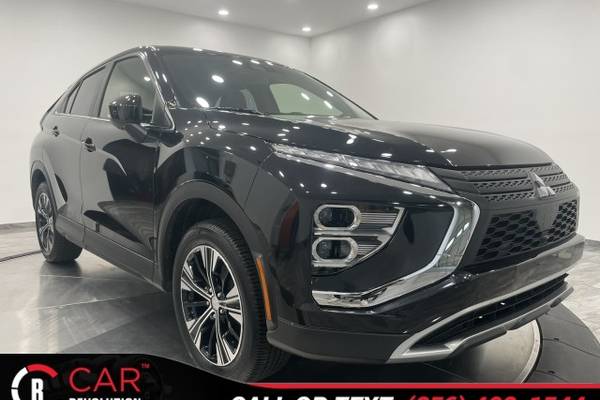
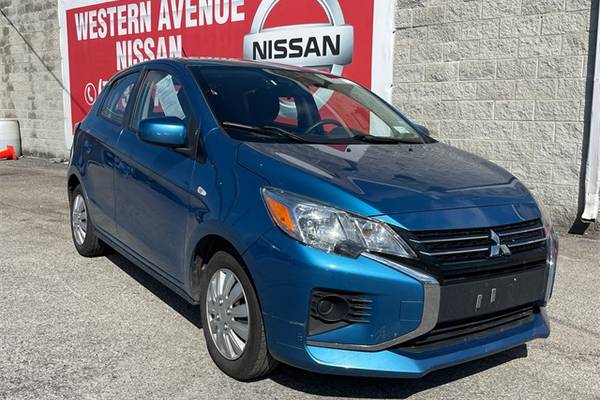
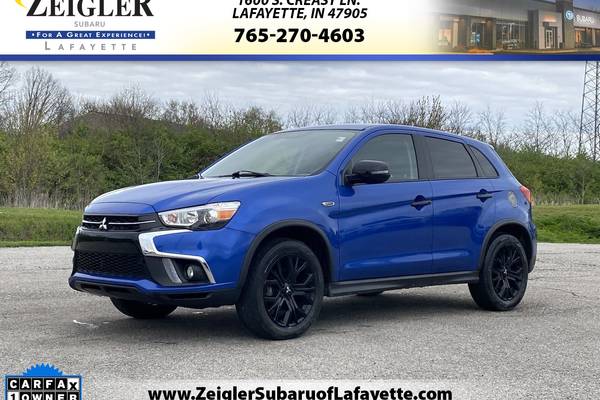
Mitsubishi Continues Downward Spiral
In November, sales continued to dim at Mitsubishi Motors North America, with the small Japanese maker moving just 2,925 units for the month. Sales were down 42.6 percent compared with last November.
Mitsubishi's year-to-date sales are off 46 percent as sales for every one of the company's U.S. nameplates is in sharp decline.
The Lancer compact, Mitsubishi's best-seller, dropped 16 percent in November to lead the brand's sales performers. The Galant midsize sedan was down 61 percent in November and the Outlander compact crossover was down 54.2 percent.
Year-to-date, the Lancer is down 34 percent, the Outlander 26.1 percent and the Galant 60.6 percent. The Eclipse coupe, perhaps Mitsubishi's best-known model, is down 72 percent for the year and the convertible Eclipse is down 48 percent.
Suzuki Spins Even Lower
Suzuki sales plummeted another 52 percent in November. The little Japanese brand sold a scant 1,540 vehicles, more than half of the 3,216 it sold a year ago. For the year so far, Suzuki has sold a mere 36,810 vehicles, down 55 percent from 81,212 a year ago.
The automaker is about to launch a new model, the Kizashi sedan. -- Dale Buss, Contributing Writer; Bill Visnic, Senior Contributing Editor; Michelle Krebs, Senior Analyst and Editor at Large
Analysis provided by Edmunds.com's Jessica Caldwell, Ivan Drury and David Greene.
Graphic by Robert Holland
Photos by Manufacturers
1 - Buick LaCrosse
2 - Toyota Camry
3 - Ford Taurus
4 - Acura MDX
5 - Dodge Journey
6 - Nissan Maxima
7 - Hyundai Accent
8 - Mini Cooper Clubman
9 - Subaru Outback
10 - Mercedes-Benz E-Class
11 - Volkswagen CC
12 - Porsche Panamera
13 - Mitsubishi Lancer Sportback
Posted by Michelle Krebs at 3:56 PM under Analysis , Chrysler , Companies , Featured , Ford , GM , Toyota | Comments (2) | digg this | Seed Newsvine


It seems that the Mini, like other "Today's Best Music" cars has probably run its course. Mini
will continue on just outside the limelight with its other once trendy brethren, PT Cruiser, HHR, New Beetle, Miata, Scion Xb.
Everyone wants one
but everyone wants no one
to have one
like their one
Posted by: fulcrumb | December 02, 2009 at 8:57 AM
Gratifying to see that good cars are selling well.
I was always amazed that Ford could survive on pickup sales, considering how long they last.
Seems to me that Honda has lost its way in terms of design. The Accord is too big and hasn't offered anything new in generations. The Civic is old. They hardly sell anything you could truly call sporty. And their scheduled maintainance is excessive.
Maybe the Mini niche is full.
Hope Suzuki pulls through and wish the best for Saab.
Posted by: mcmanus | December 07, 2009 at 10:10 AM